
Free dating sites for lesbian singles are worth testing only when no-cost access reaches the parts that make a connection possible: relevant discovery, enough profile visibility, and a realistic path to two-way conversation. Taimi explicitly publishes a Free tier, while HER offers a queer-women-focused starting point; Taimi, OkCupid, and Bumble provide useful comparison points with different community contexts. The deciding evidence comes after signup, when identity controls, nearby profiles, messaging limits, and reporting tools are visible. Registration alone is not much of a benefit.
Published by Match Pace
A free account can still hide the features needed to connect

Meaningful free access begins with more than a profile form. A useful account should let someone create a readable profile, set a discovery audience that reflects who she wants to meet, and view enough compatible profiles to make informed choices. It should also make clear whether likes are limited, whether matches are visible, whether filters narrow the pool, and whether messages can move in both directions. A daily cap is not automatically a deal-breaker; a cap that prevents any ordinary use is. The practical question is whether the free experience permits a genuine compatibility test before an upgrade prompt becomes the whole experience.
Taimi publishes a Free tier alongside paid subscription options, which makes it a sensible candidate for this kind of close inspection. That published tier does not, by itself, answer how much local discovery or messaging it permits at a given moment. OkCupid also has an official upgrade path, a reminder that a service can offer account access while reserving particular functions for membership. HER, Taimi, OkCupid, and Bumble should therefore be judged at the same point in the journey: after a complete profile and accurate preferences are in place, not from the welcome screen. If a person cannot see relevant matches, signal interest, and understand what happens after a match, the free account has not supplied enough information to evaluate it.
Warning signs that free access will not support a real conversation
The clearest warning sign is an interface that suggests connection without allowing it. Blurred profiles, obscured likes, unreadable incoming messages, or one-sided messaging can leave a user unable to tell whether mutual interest exists. So can a severe like limit reached before the local pool has been sampled, especially when the next available action is an upgrade screen with vague language about added access. Notice whether the app explains what a paid option changes before asking for payment. A workable trial has understandable boundaries: which profiles can be viewed, what creates a match, who may message, and what limit applies. When those answers stay hidden, the account is being tested less than the user’s willingness to pay.
When a small local user pool limits otherwise strong features
Even generous controls cannot create nearby activity where there is little of it. For searches around free dating sites for lesbian singles in Mesa, Murrieta, or Tacoma, the useful observation is not a broad download figure but the actual profile mix after location and distance settings are applied. Look for recent-activity indicators where the service displays them, note how far away compatible profiles appear, and watch for the same profiles returning quickly. A short run of relevant profiles that permits likes or mutual messaging offers more evidence than a long feed of distant or repeated accounts. Response opportunities matter, too: a free account should allow enough interaction to reveal whether local interest is possible rather than merely theoretical.
Lesbian-inclusive identity and preference controls
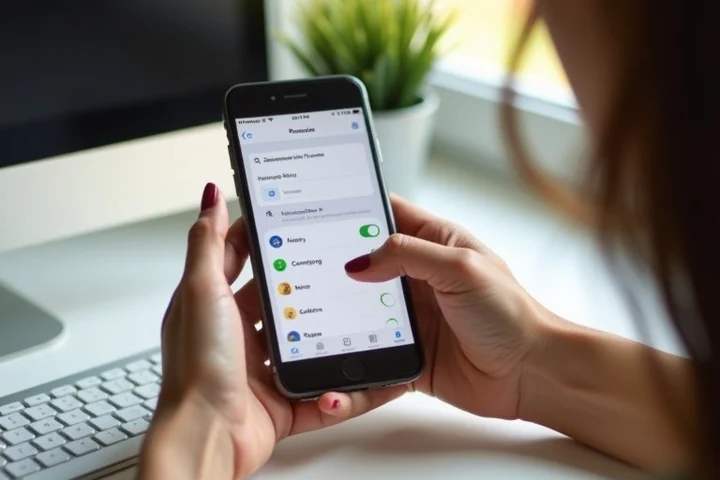
A brand’s audience description does not replace accurate settings. The free-account check should establish whether orientation, gender, pronouns, relationship intent, and discovery preferences can be represented clearly, and whether those choices keep an unwanted audience out of the browsing experience.
HER
Queer-women-focused dating and community option
Confirm that profile identity, pronouns, relationship intent, and the intended discovery audience can be expressed without forcing an inaccurate label.
Check who can discover the profile and whether the displayed pool remains relevant after preferences are saved.
Taimi
LGBTQ+ dating app with a published Free tier
Record which identity, orientation, pronoun, and relationship-intent choices are available on the Free tier during signup and discovery.
Test whether the matching audience reflects lesbian preferences and whether any relevant control is withheld or unclear.
OkCupid
Broader online dating option with official membership upgrades
Assess whether profile and matching selections describe both identity and the people being sought with enough precision.
See whether preference settings meaningfully reduce irrelevant profiles before spending time on likes or messages.
Bumble
Mainstream dating app
Check the available self-description and dating-intent selections rather than assuming broad-market design will fit every lesbian or nonbinary-inclusive preference.
Verify the audience shown after settings are applied, including whether unwanted matches can be excluded.
Moderation signals for harassment and impersonation
Safety language matters most when it leads to a usable response path. Before investing in a conversation, the account should make it easy to locate block and report controls, and the report flow should identify the kinds of conduct it can address: harassment, impersonation, unwanted sexual content, scams, or other misuse. A vague flag icon with no categories tells a thinner story than a process that explains what can be reported and what happens afterward.
Photo review or identity checks can be worth noting if a service presents them, but neither badge nor policy copy proves that every profile is genuine. The more revealing signal is whether users can act quickly when something feels wrong, without disclosing more personal information to the other person. Enforcement explanations, visible anti-harassment standards, and accessible account-safety guidance all belong in the comparison. No moderation system removes every bad actor; the sensible free-account test asks whether the tools are understandable before there is a problem.
Broad LGBTQ communities offer reach while focused platforms offer context
HER’s queer-women focus may offer a more culturally specific setting for lesbian singles, though a focused community can also mean a smaller nearby pool. Taimi’s LGBTQ+ scope and broader services such as OkCupid or Bumble may expose a user to a wider range of profiles, making precise audience controls more consequential. Reach on paper is secondary to what appears locally after preferences are applied. Context and volume both count, but neither substitutes for actual conversation access.
Run the same free-account test on every finalist
- Creating the same complete profile on each finalist, with comparable photos, relationship intent, and a clear identity description.
- Recording every available orientation, gender, pronoun, distance, age, and discovery setting, plus any setting that appears restricted.
- Reviewing the nearby pool for distance spread, repeated profiles, and recent-activity signals where shown.
- Testing the full connection path: profile visibility, likes, matching, incoming-message readability, and two-way messaging.
- Locating block and report tools, the report categories, and any explanation of photo checks, identity checks, or enforcement.
- Checking the service’s current official account, safety, and upgrade information, then recording the calendar date beside each result.
The worthwhile free option is the one that reveals enough about its audience, access, and safeguards to support a fair trial. A focused community, broad reach, and a published Free tier each matter, but usable connection remains the real measure.
References
- OkCupid Upgrade — OkCupid
- HER — official information — HER
- Taimi — official information — Taimi
- OkCupid — official information — OkCupid
- Bumble — official information — Bumble
- Taimi Pricing — Taimi