To meet LGBTQ singles in Philadelphia, combine app settings that match your comfort with a dating radius you will actually travel and one recurring community setting. This approach brings in more than nearby profiles: it accounts for cross-city trips, different levels of outness, and the chance to know someone through a shared routine. Philadelphia, Pennsylvania, works better as a dating area when the city and connected suburbs are understood as routes, not one small map pin.
Published by Match Pace
When identity visibility changes between an app and everyday life
A dating profile can reach more people than you intend when work, friends, family, and neighborhood habits overlap. In Philadelphia, you might live in one part of the city, work in a suburban office, and meet friends in the Gayborhood or shared community circles. An employer name, exact workplace route, apartment view, or public social-media link can expose more than a distance setting suggests. Some people name identity, pronouns, and relationship goals right away; others share personal context after interest has developed. Either approach supports honest dating.
Your comfort with being recognized can change between an app chat and an in-person plan. The Gayborhood might feel affirming and convenient to one person while being too identifiable for another. A neutral public spot elsewhere in Philadelphia gives both people control over what they share. Respect a stated privacy limit without calling it evasive or asking someone to explain their level of outness.
Inclusive app controls and community signals
HER describes itself as an LGBTQ+ dating and community platform, while Grindr is a location-based LGBTQ+ connection platform. On either service, check the controls currently offered: gender and orientation options, optional pronouns, profile visibility, location precision, and clear blocking and reporting routes. A platform label does not decide whether its experience feels inclusive. Look for prompts that accommodate varied identities and relationship aims, standards addressing harassment, and matches who use the information you share without challenging it.
Philadelphia's regional reach extends well beyond the city center
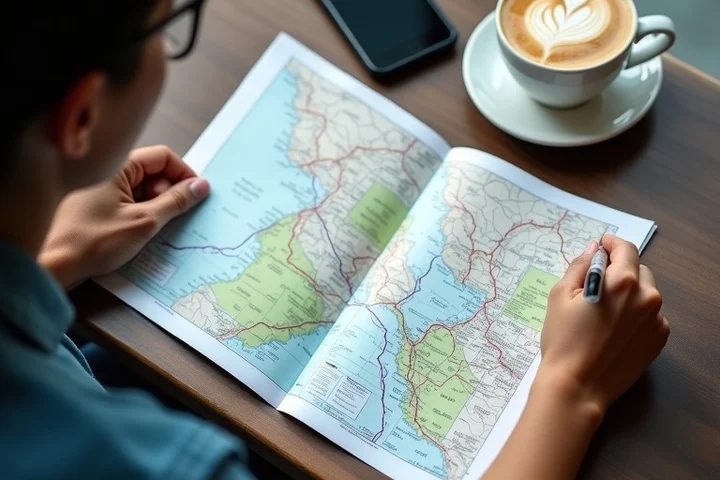
Philadelphia’s regional geography makes mileage a poor guide to dating effort. A match across a nearby bridge, beyond a highway corridor, or past a transit connection can take more coordination than someone farther away along a familiar route. Begin with places that fit a normal weeknight: your Philadelphia neighborhood, nearby parts of the city, and suburbs you would truly visit after work or on a weekend. Add a second band for the Main Line, Delaware County, Montgomery County, Camden, or other South Jersey destinations when both people accept the extra planning. Do not label a route convenient if neither person will make it consistently.
An app’s default distance number tells you less than your weekly routine. Someone in Center City with a predictable commute will have a different range from someone in West Philadelphia, Northeast Philadelphia, or a suburb dependent on driving. Bridge crossings suit a planned Saturday more easily than a short weekday dinner. Name a Philadelphia base and a general willingness, or reluctance, to date across counties or into South Jersey without giving a home address. Once the chat looks promising, use a brief video call before either person commits to the longer trip. For the first in-person date, choose a public place both people can reach independently.
Which recurring LGBTQ setting fits the connection you want?
| Recurring Setting | Repetition Pattern | Conversation Structure | Relationship Signal |
|---|---|---|---|
| Interest-based groups | Regular meetings or project cycles | Shared topic gives people an easy starting point and room for one-to-one conversation over time | Useful for learning about compatibility around hobbies, values, and follow-through rather than assuming everyone is there to date |
| Volunteer organizations | Ongoing service shifts, campaigns, or planning periods | Task-focused interaction shows reliability and collaboration before personal conversation expands | Often better for people who want values and community involvement to be part of compatibility |
| Sports or arts communities | Practices, rehearsals, seasons, or workshops | Activity reduces pressure to make every encounter a date-oriented conversation | Can reveal schedule fit, teamwork, and interest in an active or creative routine |
| Professional networks | Periodic gatherings and member-led activities | Career context can make introductions structured, but it also calls for attention to workplace boundaries | Useful when professional life affects scheduling, though it should not be treated as a shortcut to shared personal goals |
| Recurring LGBTQ social events | Repeat attendance rather than one-off appearances | Lighter conversation and familiar faces can make it easier to reconnect gradually | Best for widening a local circle, with direct discussion still needed before assuming romantic interest |
Open disclosure and selective privacy serve different needs
Open disclosure lets a profile state identity, pronouns, and relationship direction early, which can reduce mismatches before a conversation begins. It may make sense for someone whose day-to-day life already includes visible LGBTQ community ties in Philadelphia, or for someone who wants dating prospects to understand a nonnegotiable part of their life from the start. It also has a logistical benefit: the first-date plan can be discussed without having to negotiate whether a setting feels comfortable or affirming. Openness does not require publishing an employer, exact neighborhood, legal name, or links to public accounts.
Selective privacy takes a different route. A person can share enough to seek compatible LGBTQ connections while keeping photos, location details, workplace information, or family circumstances limited until trust develops. That may matter for people whose social circles cross with coworkers, relatives, or roommates, and for people who want to separate app dating from public life. Selective disclosure is not less sincere. It simply places consent and timing around personal details. Relationship intent can still be clear through ordinary profile choices and direct, nonpressured conversation, whether someone is seeking a serious relationship, companionship, or space to meet people gradually.
The practical boundary is whether information helps a compatible person plan a respectful connection or exposes more than is necessary. Keeping initial conversation on the platform, using the available block or report tools when a boundary is ignored, and meeting independently in a public Philadelphia location preserve room to leave comfortably. Requests for money, pressure to move quickly, or attempts to override privacy preferences warrant distance; the Federal Trade Commission provides consumer guidance on romance scams. A person’s preferred visibility level can change with a particular match, a route, or a setting, and that change deserves the same respect as any other dating boundary.
Questions that often come up
Do I need to use an LGBTQ-specific app to meet LGBTQ singles in Philadelphia?
No. An LGBTQ-focused platform may provide a more directly relevant community context, while a broader dating platform can still work when its identity fields, match preferences, privacy controls, and reporting tools fit your needs. The useful choice is the one that lets you describe yourself accurately and manage contact comfortably.
Can a recurring LGBTQ community setting be worthwhile if I do not want to date within that group?
Yes. A recurring setting can expand friendship, activity partners, and local familiarity without becoming a dating pool. Clear conduct, patience, and respect for the group’s purpose keep community participation separate from pressure to pursue every connection.
How can a virtual date help with Philadelphia-area distance?
A short video conversation can confirm basic interest, communication style, and scheduling compatibility before someone makes a bridge, highway, or transit trip. It is especially useful when one person is in Philadelphia and the other is in a suburb or across the river.
A Philadelphia LGBTQ dating mix works when visibility, route planning, and community involvement support one another. Inclusive app controls can narrow the right conversations, a candid regional radius can prevent travel resentment, and recurring settings can add the slower familiarity that profiles alone cannot provide.
Where the factual details come from
- Federal Trade Commission — official information — Federal Trade Commission
- William Way LGBT Community Center — official information — William Way LGBT Community Center
- City of Philadelphia — official information — City of Philadelphia
- HER — official information — HER
- Grindr — official information — Grindr
- Mazzoni Center — official information — Mazzoni Center