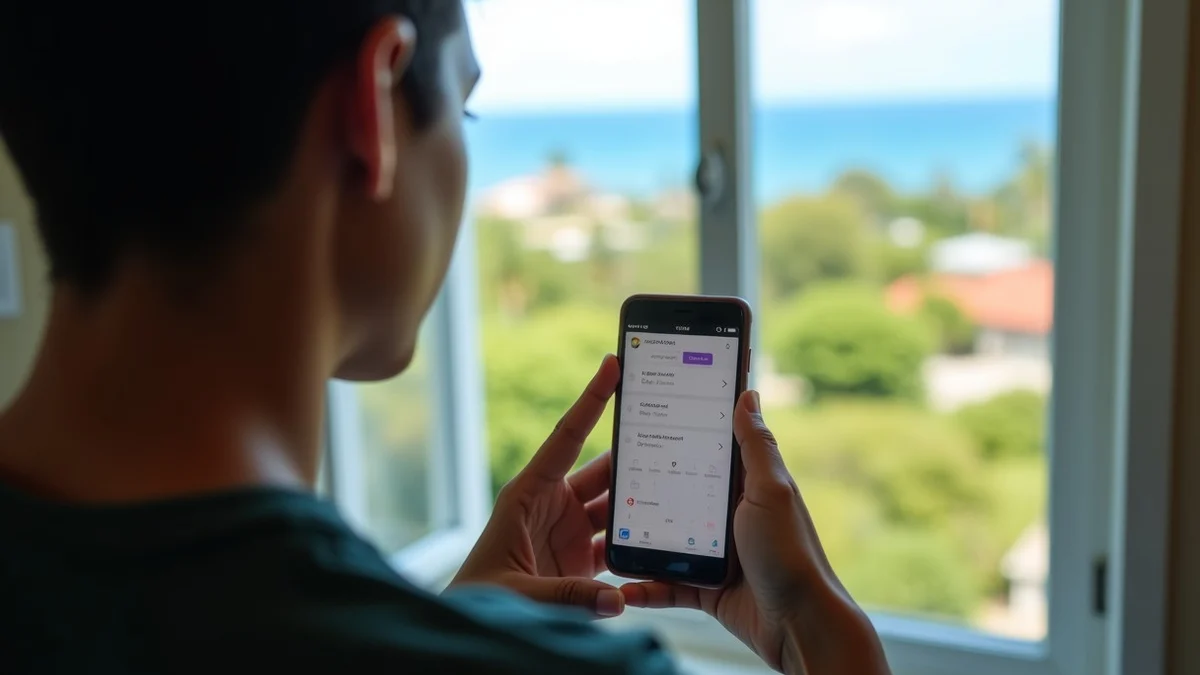
Online dating for LGBTQ singles in Honolulu works best when the profile is built for local compatibility, not simply maximum visibility. Set identity and relationship-intent fields to the level that feels right, keep a realistic Honolulu-centered distance boundary, and add a brief indication of whether you live on Oʻahu and are open to meeting locally. That small amount of clarity helps sort resident-minded matches from temporary visitor traffic while preserving room for privacy.
Published by Match Pace
Honolulu's LGBTQ online dating context

Honolulu offers a dating pool shaped by a particular kind of closeness: people may share neighborhoods, workplaces, friends, or community spaces long before an app introduces them. That can make a thoughtful profile feel more consequential than it would in a larger, more anonymous metro area. At the same time, profiles may include people passing through Waikīkī, people based elsewhere on Oʻahu, and residents with very different ideas about dating, identity disclosure, and commitment. The useful distinction is not who belongs in the pool, but which connections fit the life you actually lead. A profile that quietly states local availability, relationship direction, and a few real interests gives compatible people something better to respond to than a vague location pin.
Island geography can make the visible dating pool feel smaller
A broad search radius can look productive while producing few practical dates. Honolulu matches may be nearby in distance but separated by traffic, work schedules, or limited transportation options; matches on another island introduce a different level of planning altogether. Narrow age filters and a tightly defined relationship goal can further reduce the visible group, which is not necessarily a problem. It simply means the settings should reflect who is realistically available for the kind of connection sought.
For someone looking to date on Oʻahu, a Honolulu-centered boundary is often clearer than treating every inter-island profile as equally reachable. A bio can state whether occasional inter-island travel is workable, whether regular travel is unrealistic, or whether local first dates are the priority. This prevents an early mismatch from being mistaken for a lack of interest. Meeting around a mutually practical area, rather than choosing a location only because it is famous, also matters: Kakaʻako may suit one pair’s schedules, while another may find Ala Moana Regional Park a more sensible daytime public meeting area. Geography is part of compatibility here, not an afterthought.
Identity detail and privacy can pull in opposite directions

More profile detail can reduce mismatched attention, yet a smaller social world can make every detail feel more exposed. The strongest setup is usually selective rather than fully open or fully blank.
Identity and orientation fields
Helps surface people who understand the identity context and reduces the need to explain basic fit in early exchanges.
A person who is not broadly out, or who prefers discretion around work and family, may not want every available field displayed.
Pronouns
Can communicate respectful context and spare a potentially awkward assumption.
Displaying pronouns is personal, not a requirement; leaving them off can be a deliberate visibility boundary.
Relationship intent
Clarifies whether the account is oriented toward dating, a serious relationship, friendship, or another stated goal before time is invested.
Specificity can make a profile recognizable, so the wording can stay concise without naming private history.
Location and daily-life details
A resident cue and general area preference make local planning easier.
Neighborhood-level precision, employer details, home address, and predictable routines do not need to appear on a public profile.
When a profile belongs to a visitor rather than a resident
Visitor profiles are not inherently less sincere, but they often carry a different timeline. Travel photos, a recently changed location, references to a hotel or itinerary, and an unusually short window for meeting can all be useful clues rather than proof of anything. A resident may also be traveling, so assumptions flatten information that is easy to clarify. Early conversation can establish whether Honolulu is home, how long the person expects to remain, whether they return regularly, and what they see happening after the first meeting. Travel expectations deserve the same directness: a person open to an occasional flight has a different match horizon from someone whose dating life needs to stay on Oʻahu. Where the aim is an in-person local connection, a resident-compatible cue in both profiles is more meaningful than chemistry built around a countdown.
Which platform signals support the identity and relationship you want?
No platform name should substitute for a settings review. Grindr, HER, Hinge, and OkCupid each have official sites, but current profile options, discovery controls, reporting paths, and account-visibility choices can change. Before relying on any service, review its current in-app settings and help or policy pages for the identity fields it offers, who can view a profile, location-sharing behavior, blocking and reporting tools, and the way it presents relationship intent.
The practical test is whether the available signals let a Honolulu-based user be accurate without becoming overexposed. A platform may suit one person because it makes intent visible, while another may value more control over discoverability or profile detail. Moderation and reporting rules matter as much as matching fields: review how concerns can be reported, then use the available block and report tools when a profile crosses a boundary. Financial requests, pressure to move off-platform quickly, and inconsistent details warrant distance; the Federal Trade Commission provides consumer guidance on romance scams. For an urgent local safety concern, the Honolulu Police Department is a local law-enforcement resource.
Honolulu dating becomes more manageable when identity disclosure, resident status, and travel boundaries are treated as part of the match—not awkward details to postpone. A smaller realistic pool can be an advantage when profiles make the important constraints visible early and leave private information private.