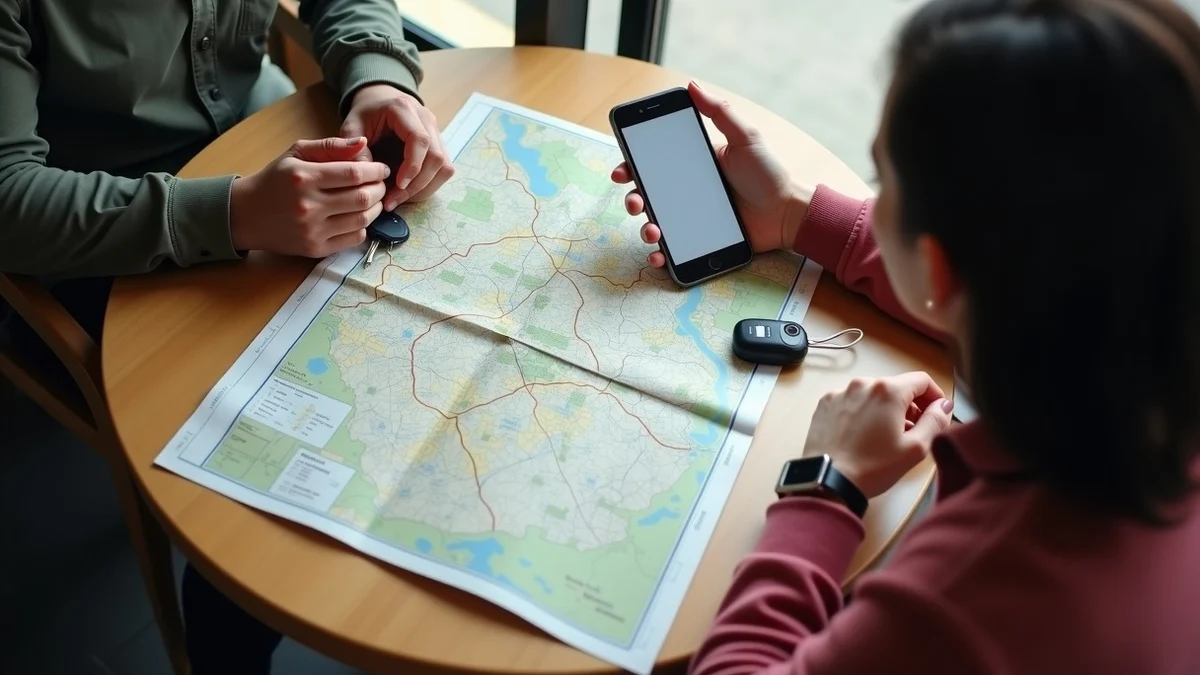
Aurora dating works best when a match radius reflects real travel time across the wider Denver metro, not just a short distance shown in an app. The practical approach is to start locally, widen discovery when it adds compatible options, and discuss neighborhood, transportation, and usual availability before making plans. That keeps promising matches from becoming repeated scheduling puzzles.
Published by Match Pace
After you match with someone across the Aurora metro area

One match lists Aurora as home, works near Denver on weekdays, drives only on some evenings, and is free mostly on Sunday afternoons. The profile may appear nearby because the platform shows a short distance, yet a weekday meeting can still mean a cross-metro trip after work while a Sunday plan is simple. Early conversation can establish the part of Aurora or the metro where each person usually starts, whether transportation depends on driving or transit, where work is located, and which days are genuinely workable. That turns a vague local match into a usable scheduling picture before either person plans around an unrealistic route.
Neighborhood and corridor travel planning
A distance filter usually represents a radius from a stated location, not the full experience of getting from one part of Aurora to another part of the Denver metro. Practical travel time changes with the route, the time of day, parking, transit connections, and whether a meeting begins near home or near work. A short line on a map can cross a busy corridor or require a transfer, while a slightly longer distance may be straightforward when both people already travel along the same route.
Useful planning starts with the likely origin points for an actual date: weekday work locations, evening home areas, and weekend routines. Each can produce a different travel estimate. Meeting near one person's workplace may work on a Tuesday but make little sense on a weekend; a transit-accessible public location may be fairer when only one person drives. Checking a mapping or transit tool for the intended day and time gives the distance setting a practical meaning. The result is not a rigid boundary, but a clearer sense of which matches can meet regularly without one person absorbing all of the travel.
Aurora supports more than one kind of first meeting
Coffee works well for a brief, low-pressure conversation; a casual meal allows more time when the exchange already feels easy. A public walk, cultural stop, or scheduled community activity can give conversation a shared focus while keeping the setting public. Current hours, access rules, event timing, weather considerations, and any reservation requirements should be checked on the venue's or organizer's official listing before the plan is treated as firm.
Clues that a venue fits the conversation stage

Venue fit depends on how much conversation the date needs and how easily either person can leave. An initial meeting generally benefits from moderate noise, visible seating, flexible arrival timing, and a clear end after a short visit. Heavy reservation pressure can make a first date feel harder to adjust if traffic, transit, or comfort levels change.
Later dates can support a longer meal, ticketed activity, or a place with more structure because there is already some evidence that time together works. Noise, seating, and the ability to extend or end the plan still matter. A place that requires a long drive and a fixed multi-hour commitment is usually a poor test of early compatibility, even when the venue itself sounds appealing.
A local Aurora pool or wider Denver-area discovery
- Search Scope: Aurora-focused discovery Likely Variety: A narrower pool may show fewer profiles, yet shared local routines and familiar meeting areas can be easier to identify. Travel And Availability: Travel burden is often lower, which can support shorter, more spontaneous meetups. Compatibility still depends on whether both people use the same parts of Aurora and have overlapping schedules. Main Risk: A tight radius can exclude compatible people whose work, transit route, or regular activities already bring them near Aurora.
- Search Scope: Wider Denver-area discovery Likely Variety: A metro-wide setting can add more potential matches and more lifestyle or schedule combinations. Travel And Availability: It also raises the chance that dates need advance planning, a midpoint, or alternating meeting areas. Broad scope works best when travel tolerance is discussed early. Main Risk: Some matches may enjoy messaging but rarely cross the metro, leaving the connection stuck at the planning stage.
What repeated scheduling friction reveals about compatibility
Scheduling friction becomes useful information when it repeats across otherwise reasonable attempts to meet. A temporary work change, a transit disruption, or one difficult week can affect anyone. Those issues look different from a continuing pattern in which one person offers only narrow windows, changes plans at the last minute, expects every meeting to happen in one area, or avoids discussing the travel involved.
The important signal is repair. A person dealing with a one-time logistical problem can usually acknowledge it, suggest another workable time, or help find a midpoint. Ongoing incompatibility appears when practical solutions never become shared responsibility. Travel tolerance, work location, punctuality, and willingness to alternate areas are ordinary parts of dating across Aurora and the Denver metro. When they repeatedly create strain, the issue is less about a single route and more about whether each person has room in their routine for the other.
An Aurora dating search becomes more efficient when its radius follows actual travel patterns and its first dates fit both people's available time. Local and metro-wide matches can both work, provided the route, meeting area, and effort to make plans remain realistically shared.