
The best dating apps for Muslim singles cannot be identified from a faith label alone. Muzz, Salams, Muslima, SingleMuslim, and Pure Matrimony provide Muslim-focused dating or marriage options, but a useful comparison turns on five checks: practice detail, marriage intention, family participation, privacy, and account-level feature availability. A service’s stated focus does not establish compatible observance, timelines, or privacy settings.
Published by Match Pace
Which faith filters reveal meaningful compatibility?
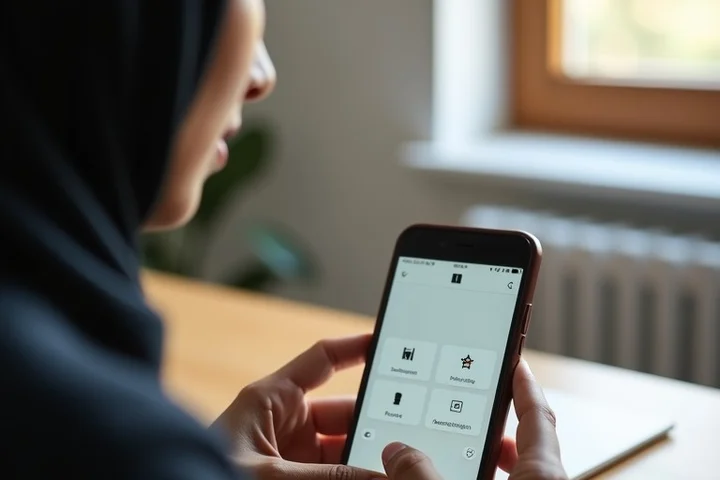
Faith compatibility depends on profile precision, not simply a Muslim-focused service description. Muzz and Salams identify as Muslim dating and marriage platforms, and Pure Matrimony identifies as marriage-focused. Those descriptions do not establish which practice fields appear in a current account. Terms such as practicing, modest, Sunni, halal, or religious can carry different meanings between members.
Muzz
Muslim dating and marriage platform
Whether profiles or search settings distinguish denomination, observance, prayer, diet, dress, and self-described practice.
Salams
Whether members can state practice details beyond a broad Muslim identity and whether those details affect discovery.
Pure Matrimony
Muslim marriage-focused platform
Whether marriage emphasis is paired with fields for religious practice, lifestyle expectations, and personal descriptions.
Marriage labels do not reliably reveal someone’s timeline
Marriage labels are routing information, not a timeline. Muzz and Salams use dating-and-marriage framing, and Pure Matrimony has a marriage-focused purpose; each description identifies the service orientation rather than any member’s schedule. An intention field can still cover very different expectations about readiness, exclusivity, children, relocation, and the pace of family introduction. Compatibility requires direct discussion of timing, exclusivity, children, location, and the practical expectations attached to marriage.
When family involvement is part of the process
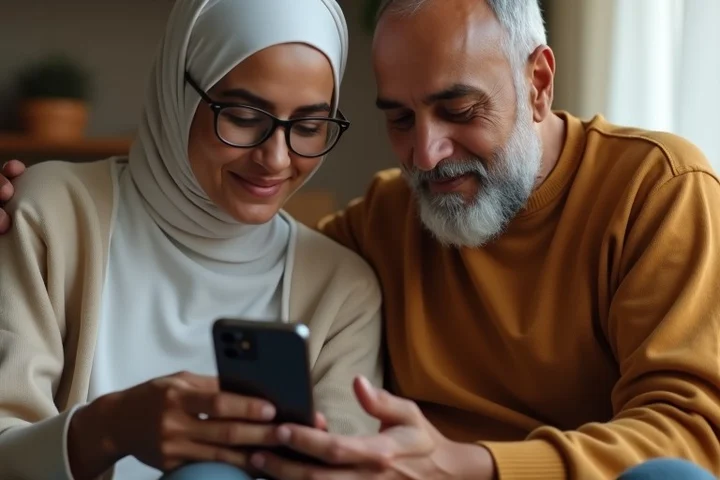
Family participation has different forms. Some Muslim singles want a chaperone, guardian, wali, or close relative included early; others prefer private initial conversations before any introduction. Neither arrangement should be presumed from a profile, a denomination label, or a marriage-intention field. On Muzz, Salams, SingleMuslim, or Pure Matrimony, the relevant comparison concerns the current account controls for adding another person to communication, sharing a profile with family, limiting photos, or managing who can view an account. Muslim dating or marriage focus alone does not establish that any particular chaperone or guardian mechanism exists. Where no in-app arrangement is available, family inclusion can still be mutually agreed as part of communication, with the timing and degree of involvement stated clearly. A family arrangement also needs boundaries on who receives a match’s name, photos, contact details, or conversation information. Individual consent remains necessary before those details are shared. Family participation can clarify expectations, but it does not prove identity, relationship readiness, or compatibility between the two people considering a match.
Signals that privacy controls fit personal practice
Privacy controls fit personal practice when their limits are as clear as their benefits. Current settings require account-level confirmation on each service.
Gender-based visibility
Can limit profile discovery to the gender categories a member chooses, where that setting is offered.
The exact audience, matching logic, and visibility exceptions need confirmation.
Blurred or restricted photos
Can reduce immediate photo exposure until a member permits viewing.
Profile text, location detail, and other identifying information may remain visible.
Screenshot controls
May discourage or notify about some image capture when explicitly offered.
No app control can prevent another person from recording content with a separate device.
Blocking and reporting
Provides a way to stop unwanted contact and flag conduct for review where those functions are available.
Blocking, reporting, and account removal can have different effects and should not be treated as the same control.
Profile discovery settings
Can affect whether a profile appears in searches, recommendations, or location-based matching.
A restricted profile may still be visible to some eligible members under the service’s current rules.
Evidence standards for a five-part app comparison
A five-part comparison records the current profile fields, marriage-intention choices, family-participation options, privacy controls, and safety or account-management tools for each service. Official help pages and privacy policies are useful for documenting stated controls, while the account itself shows whether a feature is available in the relevant location, device version, or profile setup.
For Muzz, Salams, Muslima, SingleMuslim, or Pure Matrimony, subscription restrictions should be recorded separately from feature existence. A profile field or privacy setting may be present but limited by account type, messaging access, or other eligibility rules. Local membership density cannot be verified before joining; city-level assumptions should remain separate from the feature comparison.
A strong Muslim dating-app comparison separates service purpose from demonstrated account controls. Practice details, relationship timing, family participation, and privacy settings need individual confirmation, including any subscription limits. Muzz, Salams, Muslima, SingleMuslim, and Pure Matrimony can be evaluated on the same five criteria without treating a marriage-focused label as proof of compatibility.