
Meeting Christian singles in Dallas, Texas works best when faith is part of your routine rather than a late-stage surprise. A workable plan uses two recurring local communities and one app channel, then makes denomination, lived practice, and long-term intentions clear early. That gives you more to go on than a profile line about faith and a quick first impression.
Published by Match Pace
Repeated participation creates stronger context than isolated introductions
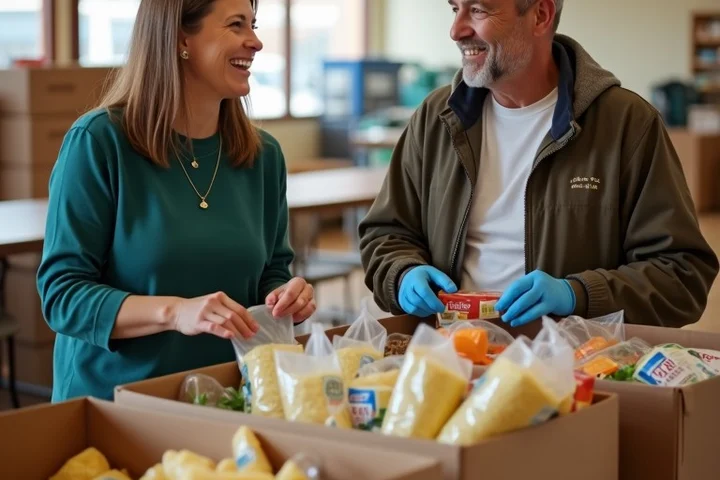
A weekly small group, service project, class, professional fellowship, or shared-interest community lets you see how someone follows through, treats others, and handles ordinary conversation over time. It also reveals whether your rhythms fit: worship, volunteering, friendships, and the pace of a normal week. One-off introductions can be pleasant, but they rarely provide much context. A recurring Dallas community does, without turning every church gathering into a dating audition.
Which Dallas channels expose you to compatible Christian singles?
| Channel | Local Reach | Faith Detail | Intent Signal | Continuity |
|---|---|---|---|---|
| Church-based groups and service communities | Strongest near your congregation, workplace area, or regular Dallas routine. | High, because shared worship and service make practice visible over time. | Varies; participation itself does not mean someone is dating. | High when the group meets or serves regularly. |
| Trusted introductions | Usually limited to your friends' and church contacts across Dallas–Fort Worth. | Often strong when the introducer knows both people's practice and values. | Clearer when the introduction is explicitly for dating. | Depends on whether either person shares a wider community. |
| Christian-focused services | Can widen your reach beyond your immediate church circle. | Christian Mingle and Upward are positioned for Christian singles, giving faith a central place in the starting context. | Generally direct because people are using a dating service. | Requires steady profile use and moving compatible conversations toward a meeting. |
| Mainstream dating apps | Potentially broad across the Metroplex. | Depends on how plainly each person describes church practice and values; eharmony is an additional online dating platform to assess on that basis. | Must be read profile by profile rather than assumed. | Good for regular conversation, though it offers little built-in shared community. |
If a promising match attends church across the Metroplex

A Dallas–Fort Worth match can be perfectly workable, yet the travel question deserves more respect than people sometimes give it. The issue is not merely whether either of you can make one first date. It is whether the drive, traffic uncertainty, and different weekend routines leave enough room for a relationship to grow without one person doing all the crossing of the Metroplex.
Early conversation can cover where each person attends, how fixed Sunday commitments are, whether midweek groups or service roles matter, and what a typical free evening looks like. Those details are practical rather than unromantic. A person who attends worship every week, serves on a team, or protects time with family may have less flexible availability than a profile suggests. The same goes for someone whose work schedule makes weekday travel difficult.
Future congregation expectations belong in the conversation before attachment gets deep. Neither person needs to decide immediately where a future couple would worship, but both should be able to discuss whether they expect one church home, are open to visiting each other's congregation, or see geography as a serious limit. Reciprocal effort matters here. If dates, visits, and schedule adjustments naturally come from both sides, the distance is a logistics problem. If the arrangement already rests on one person making every sacrifice, that is useful information.
Denomination, practice, and relationship-intent language
Your profile does not need a statement of doctrine. It does need enough plain detail to prevent mismatches. Name your tradition or church background when it matters, then connect it to practice: regular worship, a small group, volunteering, prayer, Scripture reading, or another genuine part of daily life. Add that you are dating with a long-term relationship in mind. This is clearer and kinder than vague faith language or a rigid list of disqualifiers.
Invite a promising connection into a specific, low-pressure plan
Once a conversation has shown basic faith and relationship-goal alignment, a specific invitation is usually easier to answer than an open-ended suggestion to meet sometime. The useful version includes a public setting, a particular day, a start time, a modest duration, and room for the other person to offer a different option. It signals interest without creating the feeling of an audition or an all-evening commitment.
In central Dallas, Klyde Warren Park provides a recognizable public meeting point for a short daytime walk or coffee nearby. The Dallas Museum of Art can suit a conversation with a natural endpoint, especially when both people prefer an activity over sitting across a table for hours. Either plan benefits from confirming current access details before setting it.
The invitation should also make logistics fair. A person coming from Fort Worth, Plano, or another part of the Metroplex may reasonably prefer a midpoint or a different day. A calm alternative keeps the answer simple: they can accept, suggest another public location, or decline without a strained back-and-forth. For a first meeting, personal addresses stay private, each person handles their own transportation, and the plan remains public and time-bounded.
The strongest Dallas approach is not a single perfect app or event. It is a steady mix of real community, a faith-forward dating channel, and early clarity about practice, distance, and intent. That combination makes the first invitation feel like a sensible next step, not a leap.