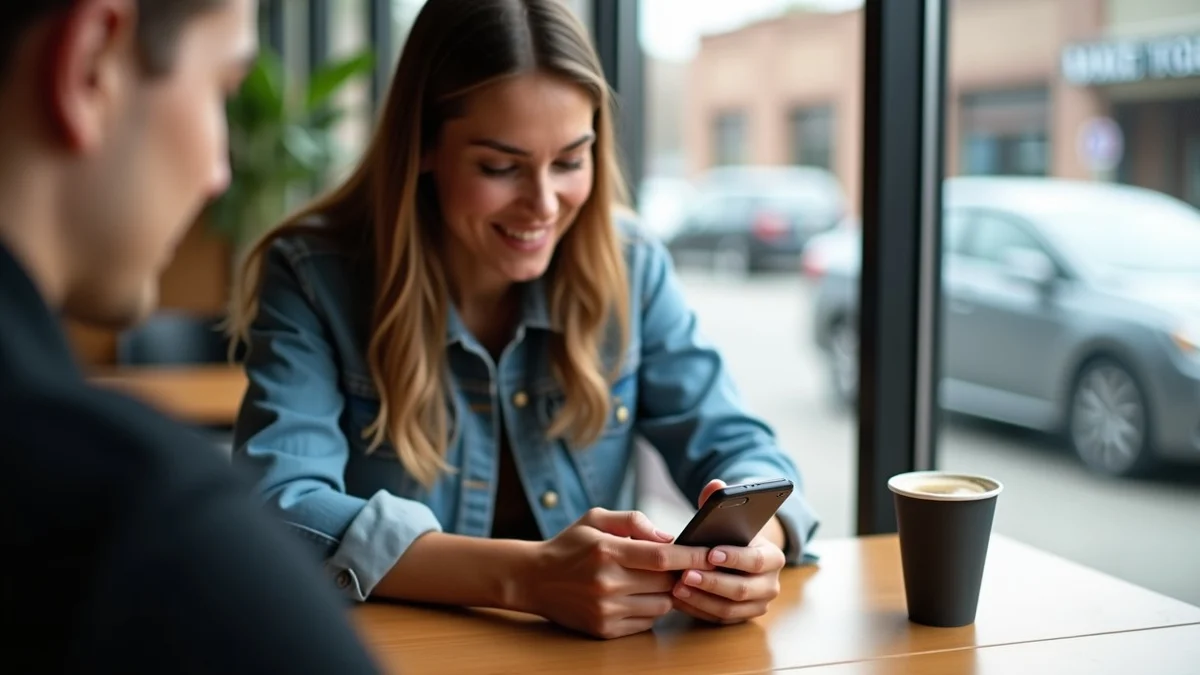
Young professionals looking for safe dating apps in Boise should assess privacy controls and response tools rather than trust a broad safety label. The practical choice is an app whose current settings let you limit identifying details, keep early contact in-app, and block or report without friction. No platform removes every risk, especially when work, social, and dating circles can overlap in the same city.
Published by Match Pace
When Work and Dating Networks Overlap in Boise
In Boise, a dating profile can reveal more than its owner intends. An employer name, a narrow job title, a recognizable office backdrop, or a polished professional headshot may give a match enough material to connect a profile to a work identity. Mutual contacts can narrow the field further, particularly when people move through overlapping professional communities, industry events, alumni circles, or familiar downtown spaces.
The concern is usually not one dramatic disclosure. It is clue stacking. A profile that says where someone works, shows a branded badge, identifies a specialized role, and mentions a regular after-work stop can make an outside search far easier than any one detail would on its own. A dating profile works better when it describes interests and general work direction without functioning as a miniature professional directory.
Protective features matter more than an app's safety label
A safety label has little value until the underlying controls are visible and usable. Before spending time on Hinge or Bumble, and before adding Tinder or Coffee Meets Bagel to the mix, review the current privacy, safety, and account settings each service makes available. A stronger setup has a clear block function, an easy reporting path, and a way to keep early calls or messages inside the app rather than exposing a personal number. Location controls deserve close attention: broad matching distance is different from sharing a precise, repeatedly updated position. It is also worth checking how profile photos can be shared or saved, whether the service explains how reports are handled, and how an account can be recovered if access is lost. These tools can reduce exposure and give a user more control over contact; they do not establish another person's intentions or guarantee a safe interaction.
What identity verification actually signals
Verification can be useful, provided it is read narrowly. A photo check may indicate that the account holder completed a likeness step at a particular point. A phone check may indicate control of a phone number. A document check, where offered, may connect submitted account details to the document the service reviewed. Each signal can make a throwaway or casually fabricated account harder to maintain.
None of those checks can establish that a person will respect boundaries, tell the whole truth about their circumstances, behave appropriately in person, or remain the same person using the account over time. Verification also does not prevent someone known through work or a professional network from recognizing profile details outside the app. The useful posture is to treat a badge as one data point alongside consistent conversation, respect for a reasonable pace, and a willingness to keep early contact within the app.
That distinction matters for busy professionals, who may be tempted to read verification as a shortcut through uncertainty. It is better understood as a modest identity signal, not a substitute for privacy settings, boundaries, or a thoughtfully planned first meeting.
Signs a match is probing for workplace details

Career conversation is normal; a pattern of narrowing questions is different. Repeated requests for an employer name, office location, nearest cross streets, commute timing, daily schedule, professional profile, or immediate move to a personal number can gradually map someone’s routine. One question does not prove harmful intent, but pressure that continues after a boundary has been set is meaningful information. A match who treats limited workplace details or in-app contact as a problem is showing that convenience matters more to them than the other person’s comfort. Blocking and reporting tools exist for precisely this kind of escalating interaction.
Protect your job, location, and schedule
- Remove employer names, highly specific job titles, office landmarks, conference badges, workplace uniforms, and links that lead directly to a professional profile. A broad field or general role can provide context without making an account searchable by work details.
- Use the least precise location or distance setting that still supports local matching, and disable precise location sharing when the app allows it. Distance should help find Boise-area matches, not reveal a daily position.
- Keep recurring commute times, office days, regular gym visits, and home-area details off the profile and out of early conversation. Those details become more useful only after trust has developed.
- In-app messaging and calling preserve a layer of privacy during the early exchange. If another contact channel later feels appropriate, a separate personal channel is preferable to a work number, work email, or professional account.
- A unique password and protected recovery options make it harder for a dating account to become another route into personal information. Account security belongs in the same privacy review as profile content.
Boise first-meeting logistics
The first meeting needs enough structure to be easy to leave, not enough intimacy to reveal a routine. Downtown Boise offers a recognizable central district for choosing a staffed public setting with other people around, without tying the meeting to either person’s workplace. Independent transportation keeps the arrival and departure separate, so there is no need to share a home address, office address, parking pattern, or usual route.
A Boise River Greenbelt walk may sound casual, yet an open linear corridor provides less of the controlled, staffed setting that suits an initial meeting. It can be saved for later, once both people have established more trust. Before meeting, a trusted person can have the match’s profile name, the location, the planned time window, and a check-in plan. That preparation is not an accusation; it simply leaves the dater in charge of the evening.
Local convenience without workplace exposure
Local convenience does not require offering the place closest to work or home. A neutral, reachable area of Boise can keep the plan simple while avoiding an office block, a regular gym, a residential street, or the café where someone is known by name. Downtown Boise can be useful precisely because it is a defined destination area rather than a clue to one person’s routine. The same principle applies when a match suggests meeting near an employer: declining that location does not require an elaborate explanation or a disclosure of where a person would prefer not to be recognized. A reasonable match can work with a neutral meeting point. Persistent insistence on a location that exposes a routine is a good reason to pause, end the exchange, or use the app’s block and report options.
For Boise professionals, dating-app safety is largely a matter of controlling the small details that connect a profile to real life. Keep work identity broad, treat verification as limited evidence, and favor early meetings that do not expose a commute or address. The right pace leaves room to judge the person, not just the profile.
References
- Coffee Meets Bagel — official information — Coffee Meets Bagel
- Downtown Boise Association — Downtown Boise Association
- Hinge — official information — Hinge
- Bumble — official information — Bumble
- Tinder — official information — Tinder
- Boise Police Department — City of Boise