
Safe dating websites for single men should be shortlisted by inspectable reporting, blocking, privacy, verification, and enforcement rules, not by a broad promise that every account is safe. Meaningful protections reduce exposure and create a record when misconduct occurs, but they cannot establish another member’s intentions or prevent every scam. A defensible shortlist compares the controls available before signup, the information required to use them, and the route for reporting harm.
Published by Match Pace
Safer dating websites provide visible controls and accountable enforcement

A dating service merits consideration when its safety tools can be located before an account is created. Useful signs include a stated verification process, profile and message-level block and report tools, rules covering impersonation, fraud, harassment, and sexual coercion, and a stated ability to restrict or remove accounts. The useful test is whether help and policy pages identify the control, the conduct covered, and the route for reporting abuse.
Moderation information deserves the same scrutiny. A platform may use automated detection, human review, or both, yet its public materials should establish what follows a report: whether reports receive review, which account or content actions may occur, and whether support or appeal channels exist. Accessible safety rules, privacy terms, community standards, and payment policies allow comparison before profile details or card information are supplied.
Account-level controls also matter. A service that permits password changes, session review, account recovery, and data deletion gives members more options if an account is compromised or no longer wanted. Safety language has little value when the underlying controls, limits, and enforcement process cannot be found.
Weak reporting systems reveal when protection claims lack substance
Protection claims carry more weight when reporting is available from the profile and conversation where the problem appears, categories describe the conduct being reported, and policy pages explain possible enforcement. A pre-join review can also examine recent independent reviews for specific, recurring descriptions of unresolved reports, billing disputes, impersonation, or inaccessible support. Public reviews remain incomplete evidence: they cannot confirm an individual case, measure every report outcome, or prove that current practices match a past experience. Missing policy detail, hidden report routes, and no stated response process remain useful reasons to exclude a service from a safety-focused shortlist.
When a match requests money or an immediate move off-platform
A request for money, gift cards, cryptocurrency, investment participation, account access, or financial assistance is a serious fraud signal. Emergency stories, rapid declarations of attachment, inconsistent names or biographical details, and profiles that resist ordinary identity checks can support the same concern. An immediate push to text, encrypted chat, email, or social media can remove the exchange from the platform’s reporting record; moving off-platform is not proof of fraud, but urgency combined with secrecy or a financial request is material. Sexual-extortion schemes may seek intimate images and then demand payment or further content under threat of disclosure.
Privacy controls for identity, location, and contact details
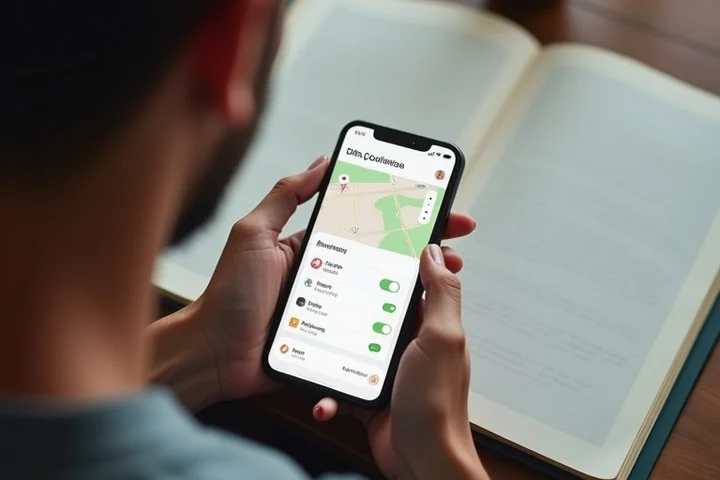
A privacy review should identify who can view a profile, whether discovery can be limited, and whether location appears as a broad area or a precise distance. Exact distance can reveal a routine or approximate home area when it is repeatedly visible from different locations. Contact syncing can connect a dating account to an address book, while external search discovery can expose a profile beyond the intended dating audience; both settings warrant clear explanations and an available opt-out where offered.
Profile content should not supply an employer, work schedule, personal phone number, home address, private email address, or other details that make offline identification easy. Where a service offers screenshot alerts or restrictions, its documented scope matters because such features may not prevent copying, photographing, or saving content by other means. Privacy controls reduce unnecessary exposure; they do not make shared information retrievable once another person has received it.
Verification badges do not prove that every profile is trustworthy
A verification badge may show that an account completed a service-specific check, such as demonstrating access to a device, image, phone number, email address, or identity document. It can reduce some forms of low-effort impersonation and duplicate-account abuse. The badge does not establish honesty about relationship status, age, intentions, finances, or personal history, and it does not confirm that every statement in a profile remains accurate.
A verified account can still be operated deceptively, transferred to another person, or taken over after verification. Verification therefore belongs on a shortlist as one control among reporting, moderation, privacy, and account-security measures, not as a substitute for those measures.
Gradual trust-building offers more protection than permanent anonymity
Staged communication keeps early interaction within the dating service long enough for its block and reporting tools to remain available. It also limits the initial disclosure to the information needed to assess whether a conversation is coherent, respectful, and consistent over time. Limited verification can then add context without requiring a home address, workplace details, financial information, intimate images, or unrestricted access to personal social accounts. A short, ordinary live interaction may resolve some identity uncertainty, while the platform record retains the earlier account name, profile, and messages if a report becomes necessary. Premature personal disclosure has the opposite effect: a phone number, employer, regular schedule, or social profile can be used for contact outside the service even after a match is blocked. Indefinite anonymous messaging creates a different problem. It avoids disclosure but can leave no meaningful basis for assessing whether the person can communicate consistently, verify basic identity claims, or move toward a real-world connection responsibly. The practical middle ground is limited, reversible disclosure that expands only when the other person’s conduct remains consistent and no pressure, secrecy, or financial demand appears. This approach does not guarantee safety, but it preserves more control than either immediate disclosure or permanent uncertainty.
Document and report suspicious behavior through the appropriate channels
- Preserve the profile name, profile URL or identifier where available, messages, dates and times, screenshots, payment requests, transaction records, and any threats before the account or conversation disappears.
- Use the platform’s in-app report route for the relevant profile or message category, then block the account to stop further contact. A report should distinguish impersonation, fraud, coercion, harassment, or threats when the service provides those categories.
- Contact the bank, card issuer, payment provider, or cryptocurrency service promptly if money, account credentials, or payment details were shared. Keep records of communications with the financial provider and avoid sending further funds to recover an earlier loss.
- Report suspected fraud to the Federal Trade Commission and the FBI’s Internet Crime Complaint Center when financial loss or an attempted financial scam is involved. Credible threats, blackmail, stalking, or immediate danger warrant contact with local law enforcement; imminent danger requires emergency services.
Meaningful dating-site safety comes from inspectable controls, limited personal exposure, and a usable response path when conduct becomes suspicious. Verification and moderation reduce some risks but do not replace documentation or careful disclosure. A shortlist built around reporting, privacy, and enforcement information is more defensible than one built around broad safety claims.