
Cycling can provide a useful shared interest on a dating profile without making a rider's routine visible. For a safe online dating site for cyclists, the central test is whether profile, location, and linked-account settings allow cycling interests to be shown without publishing route maps, activity timing, home-area clues, or identifiable club details. Verification and moderation can improve accountability, but neither replaces careful control of the information attached to a profile.
Published by Match Pace
Repeated route details can reveal more than a profile location
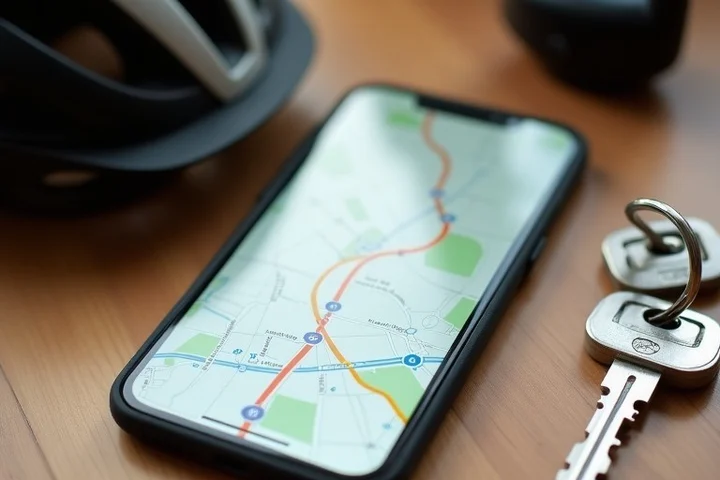
A broad city or neighborhood label reveals less than a pattern of cycling details. Repeated mentions of the same trailhead, café stop, bridge, commute corridor, weekday ride time, or recovery route can identify a likely home area, workplace, schedule, and frequently visited locations. Route screenshots and public activity maps may also show where rides begin or end. Club names, team jerseys, and recurring group-ride descriptions can connect a profile to a local affiliation even when an exact address is absent. A cycling profile remains credible when it describes interests, terrain preferences, or riding style without documenting the regular route behind them.
What does cyclist verification actually establish?
Cyclist verification should be assessed by what the site says it checks, not by what a profile badge appears to imply. A selfie, photo, phone, email, or identity check may indicate that an account completed a particular verification process or that submitted material was compared in some way. It does not establish that a person has the claimed riding experience, belongs to a named club, owns the equipment shown, follows group-ride etiquette, or will behave safely in person. A rider who lists advanced skills or a local club may still be making an unverified profile claim. Community moderation is more useful when the service clearly explains how members can report impersonation, harassment, route-location pressure, or suspicious requests for off-platform contact, and when blocking tools are easy to locate. Published community rules and reporting options describe available safeguards, not a promise that every account or interaction has been screened. A cyclist-focused group inside a dating service also deserves the same scrutiny as the main platform: who can post, whether posts are visible beyond members, whether event details can be indexed or shared, and whether group administrators have a defined reporting channel. Verification can support a basic level of account accountability; it cannot certify compatibility, cycling credentials, or personal conduct.
Public group rides create social context without requiring private route disclosure

An independently listed public group ride can provide a lower-disclosure setting for a first in-person introduction. The listing supplies shared context through a stated meeting point, published organizer, expected attendance, and a route chosen for the event rather than one rider's private training routine. Other participants remain present, so the meeting does not depend on sharing a home address, vehicle location, usual start point, or isolated route. The group setting also allows each person to observe whether the other respects ordinary boundaries around pace, space, and participation.
The useful distinction is between joining an event that exists apart from the match and arranging a ride around one person's routine. A regularly attended dawn ride near home, a commute loop, or a route beginning at a private residence can reveal more than a first meeting requires. An event held away from a usual start area and separated from normal ride timing reduces the amount of routine information disclosed. Attendance at a public ride still does not verify a match's identity or intentions, and it does not require sharing live location during the ride. A date can remain centered on a public event while personal route history, fitness records, and post-ride destination stay private.
Privacy controls for maps, fitness links, and activity timing
Fitness-app links can expose route maps, ride titles, dates, start times, photographs, follower lists, and public profile names beyond the dating account. Map redaction around regular endpoints and delayed activity posting reduce immediate location detail. Photo files can contain location metadata, while visible club affiliations and public profile links can connect a dating profile to other accounts.
Profile visibility, linked-account permissions, map settings, and audience controls determine how much of this material is reachable. Published privacy and safety pages may describe available tools, but settings, enforcement, and account visibility should be checked within the service before relying on them. No site safeguard prevents disclosure once route details or real-time activity have been shared directly.
A cyclist dating profile can show a genuine interest in riding without functioning as a map of daily life. Broad descriptions, limited account links, and public events that are separate from normal routes preserve useful social context. Verification and moderation add limited safeguards, while control of route, timing, and cross-platform information remains the decisive privacy measure.